The "No" List: What We Try Not to Build Into a Health App
The most important product decisions are often the ones we say no to. Features are easy to add. Restraint is harder, and for a health app it matters more than in most products, because people often open a health app at a worried or vulnerable moment.
At SystemOnSilicon, our health apps follow a short list of things we try not to build.
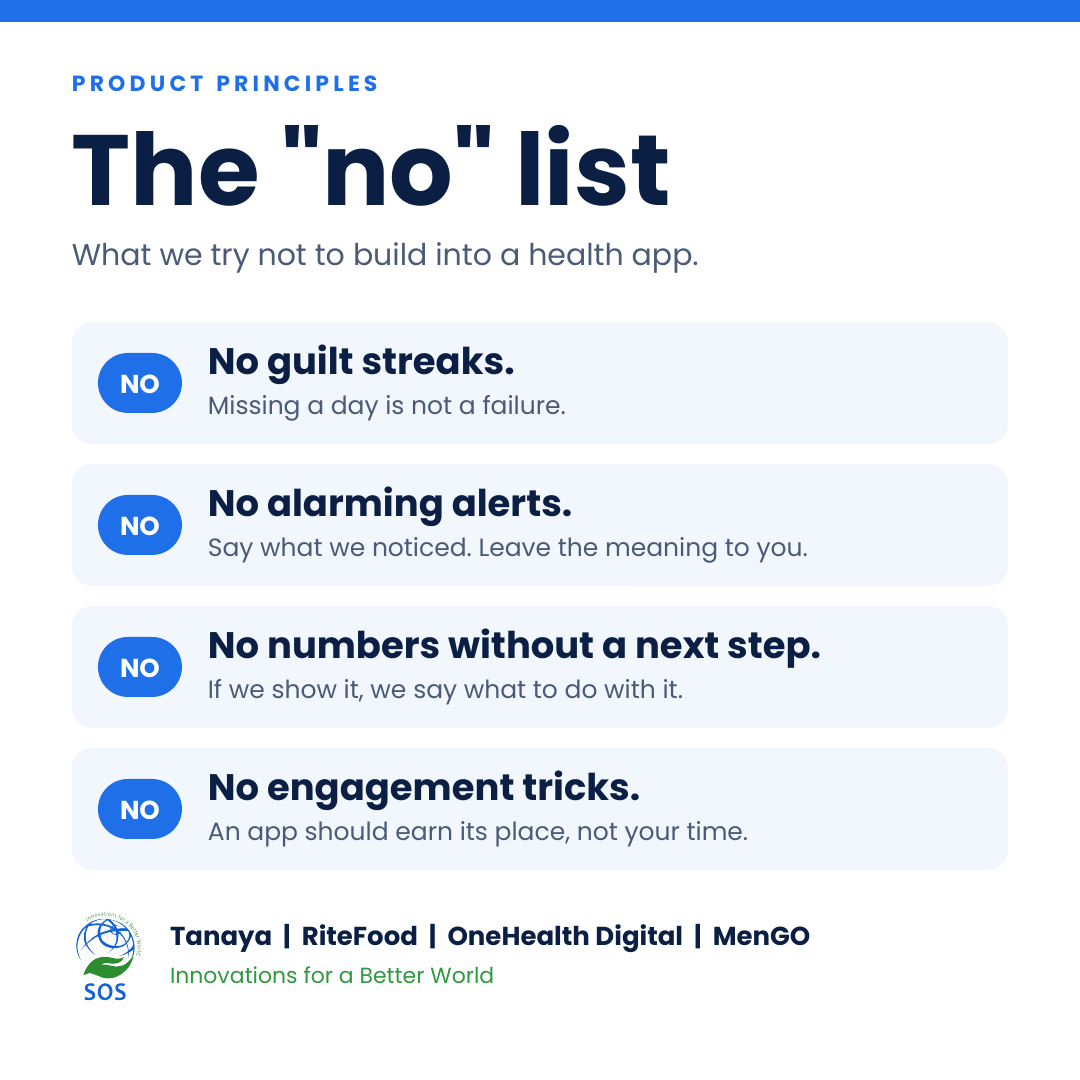
No guilt streaks
Streaks are popular because they work: nobody wants to break one. But in health, a broken streak can feel like failure, and failure is a reason to stop using the app at all. Missing a day is not a failure. A health app should welcome people back, not remind them of what they missed.
No alarming alerts
A notification should inform. It should say what the app noticed, in calm and plain words, and leave the meaning to the person. "Your cycle is running longer than usual. Want to log how you feel?" is a better message than anything that sounds like an emergency.
No numbers without a next step
Charts, scores and averages can feel precise without being useful. If we show a number, we try to say what it means and what a sensible next step could be: log something, read something, or talk to a professional. A number with no next step only adds worry.
No engagement tricks
Many apps are measured on time spent. For a health app, we think that is the wrong scoreboard. Nobody wants to spend their evening inside a period tracker, a diet log or a clinic dashboard. People want to log something quickly, read something clear and get back to their life. An app should earn its place, not take more of someone's time.
One list, four apps
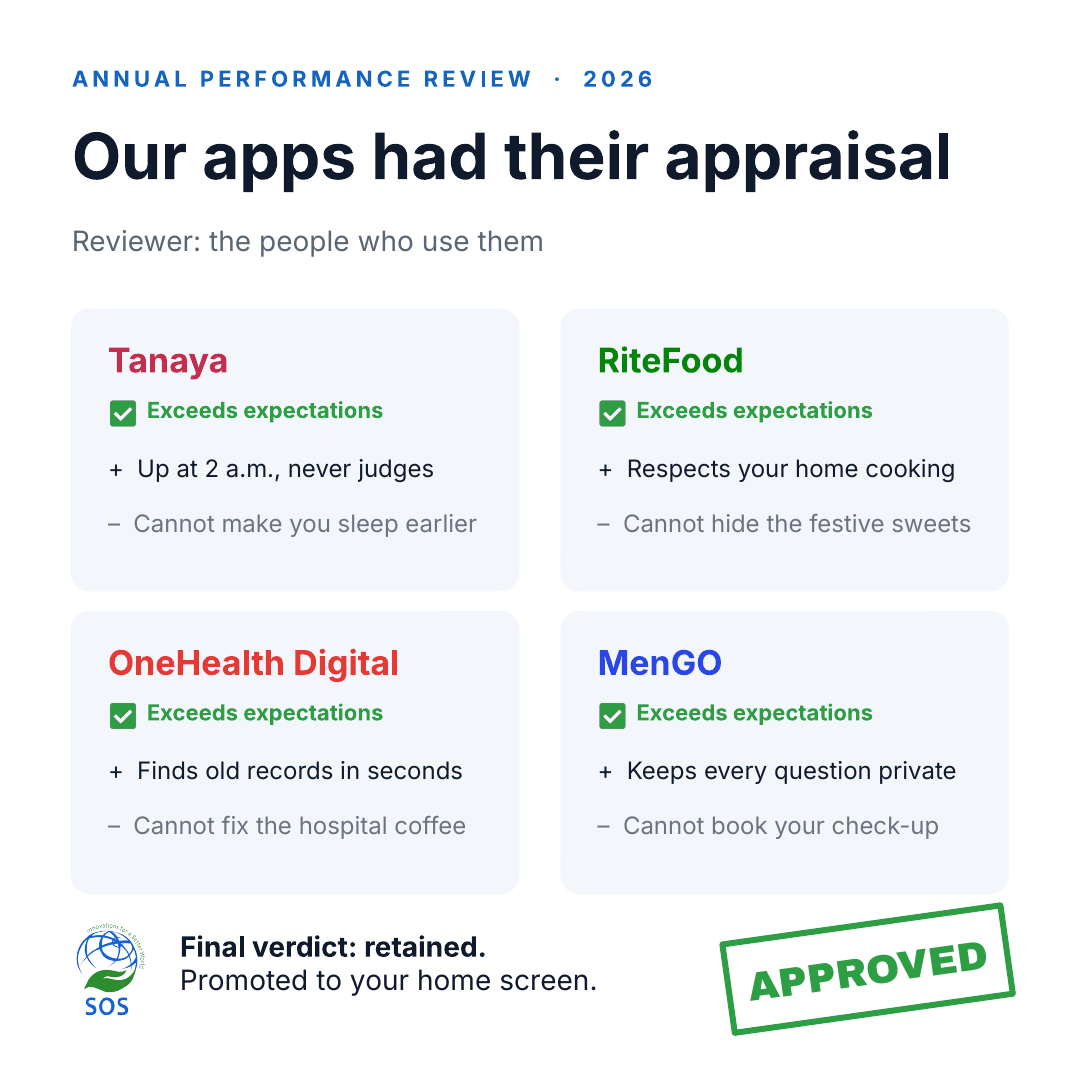
Tanaya, RiteFood, OneHealth Digital and MenGO are built for different people: women looking after their wellness, people planning their meals, hospitals and clinics running their practice, and men looking after their personal health. Each app applies the same list in its own way.
Your turn
What is on your own "no" list for the products you use or build? We would like to hear it.
SystemOnSilicon is a USA and India based high-tech R&D venture building AI-powered solutions across AgTech, FoodTech and HealthTech. Learn more at systemonsilicon.com.